 English
  Magyar
In this guide Use the quiet season to prepare
For many hotels, the quieter months bring lower occupancy and more operational flexibility. That combination creates a useful planning window. Work that is difficult to complete during peak demand can be handled with more attention, tested properly and introduced before the team becomes busy again.
The goal is not to change everything at once. It is to identify the few commercial and operational improvements that will have the greatest effect when demand returns.
Use the quiet season to prepare
Three areas deserve particular attention before the next peak period.
These tasks are connected. A performance review shows where the commercial process needs improvement. Pricing turns those findings into daily decisions, while the right systems make the workflow sustainable during busy periods.
1. Audit commercial performance
Begin with a structured review of the previous season. The purpose is to understand what produced demand, where revenue was lost and which processes created unnecessary work.
What to review
- Occupancy, average rates and revenue by date and room type.
- Guest segments, booking windows and cancellation patterns.
- The performance and cost of direct and third-party sales channels.
- Current competitors and changes in the local competitive set.
- Pricing rules, approval processes and response times.
- Guest reviews and recurring comments about the property.
- Occupancy and revenue targets for the next season.
Look for patterns rather than isolated results. A weak weekday, an underperforming room type or a channel with high acquisition costs can point to a specific action. The audit should end with a short list of priorities, clear owners and measurable targets.
2. Refine dynamic pricing
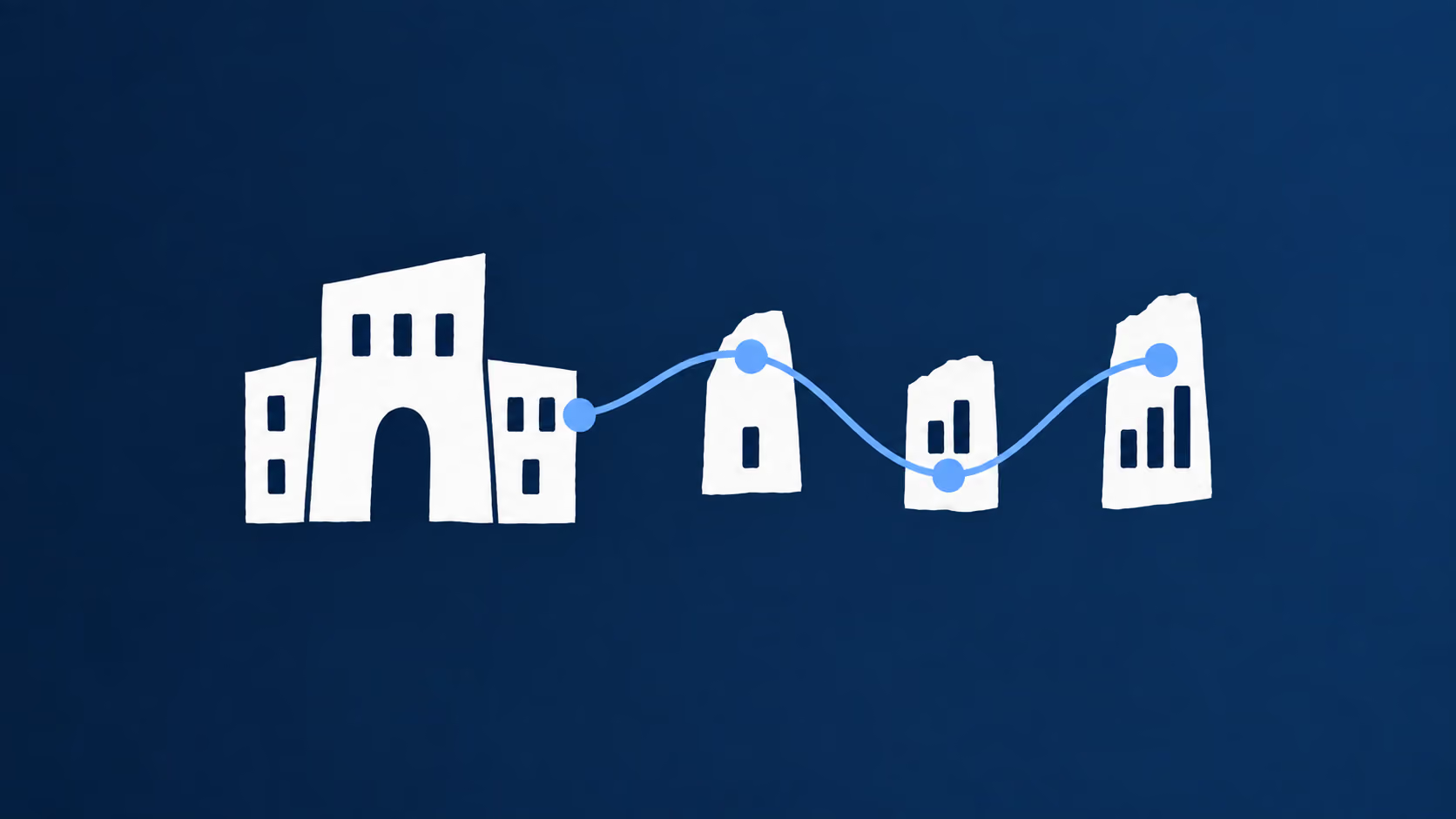
Fixed seasonal prices rarely reflect how demand changes from one day to the next. A stronger pricing strategy responds to booking pace, remaining availability, day of the week, local events and relevant competitor offers.
Common warning signs
- The same price is used across dates with very different demand.
- Rooms sell too quickly on high-demand dates.
- Weekdays and weekends are not priced differently.
- Important events or holidays are identified too late.
- The gap between the lowest and highest rates is too narrow.
- Length-of-stay restrictions are missing or used without a clear purpose.
What a stronger approach includes
- Agreed commercial goals and pricing boundaries.
- Reliable hotel, booking and market data.
- Different parameters for different demand periods.
- Regular review of competitor offers and booking pace.
- Clear rules for automation, approval and manual intervention.
Dynamic pricing should not mean increasing every rate. It means choosing a price that reflects the opportunity and the hotel’s positioning on each date. Automation can handle repeatable calculations and updates, while the hotel retains control over strategy and exceptions.
3. Evaluate hotel software
Introducing a new system takes time. The quieter season gives the team room to compare options, prepare data, complete integrations and learn a new workflow before occupancy rises.
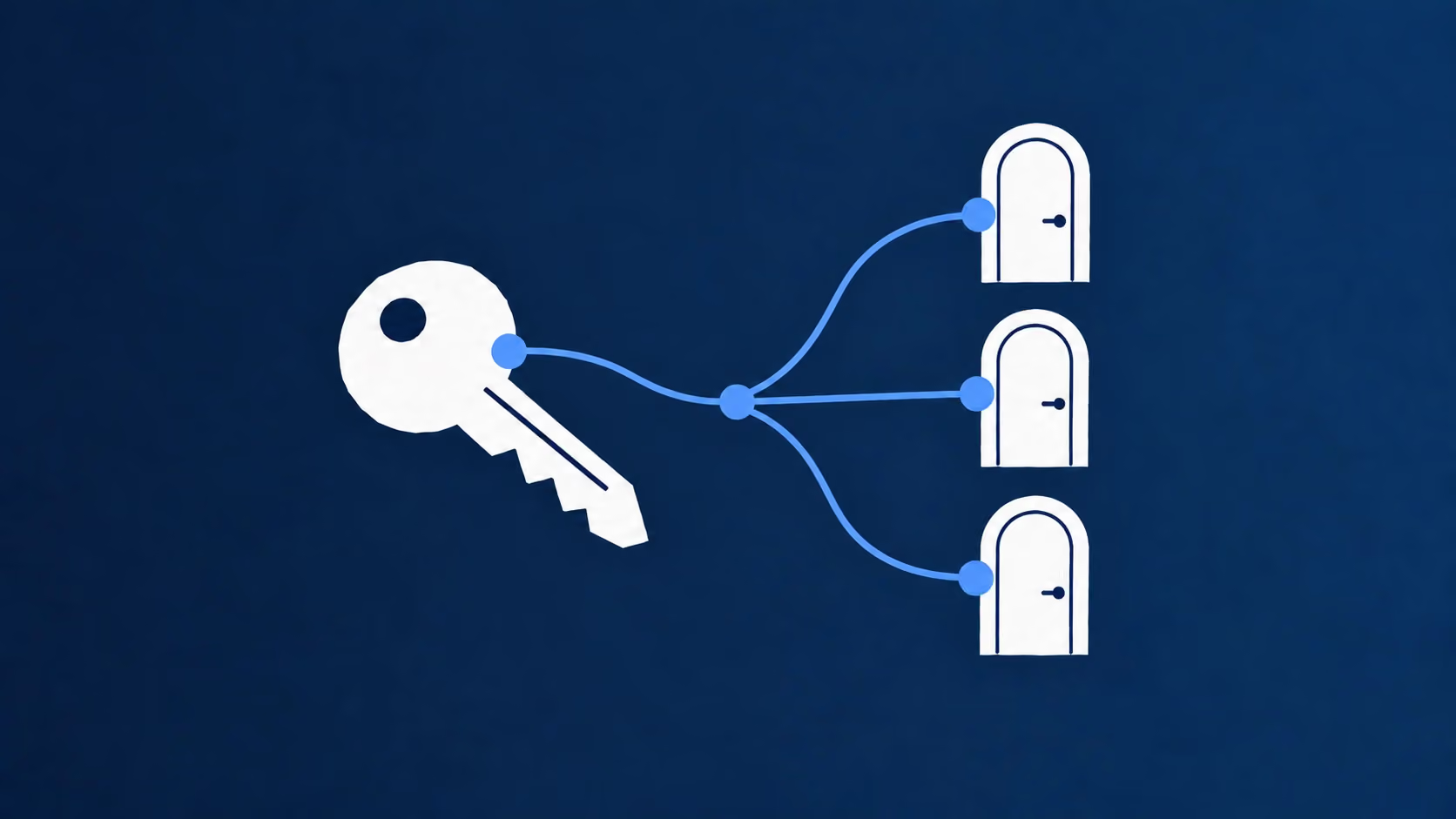
The review may include a property management system, revenue management system, channel manager, booking engine or restaurant system. Integrations matter because disconnected tools create duplicate work and increase the risk of inconsistent data. For example, Previo PMS can exchange hotel data and pricing updates with RoomRaiser.
Questions to ask before selecting a system
- Which specific operational or commercial problem should it solve?
- What result is expected, such as time savings, better service or higher revenue?
- Which features are essential, and which are only useful additions?
- Does the system integrate with the hotel’s existing technology?
- What implementation, training and support are included?
- What is the full cost, including setup and any fixed-term commitment?
- Can the hotel test the workflow before making a long-term decision?
Allow time not only for installation but also for configuration, testing and team training. A well-selected system creates value when people understand how it fits into daily decisions and who is responsible for each part of the process.
Frequently asked questions
When should a hotel begin preparing for peak season?
Start early enough to complete analysis, system changes and training before demand accelerates. For a strongly seasonal property, the quieter months are usually the safest implementation window.
Which performance figures should be reviewed first?
Begin with occupancy, average rate and revenue by date and room type. Add booking pace, channel cost, cancellation patterns and guest segments to explain why the headline figures changed.
Does dynamic pricing always mean higher prices?
No. Dynamic pricing adjusts rates to the opportunity on each date. Depending on demand, availability and positioning, the appropriate action may be an increase, a decrease or no change.
Why introduce new software before the busy season?
The team needs time for data preparation, integrations, configuration, testing and training. Completing those steps during a quieter period reduces operational risk when occupancy increases.